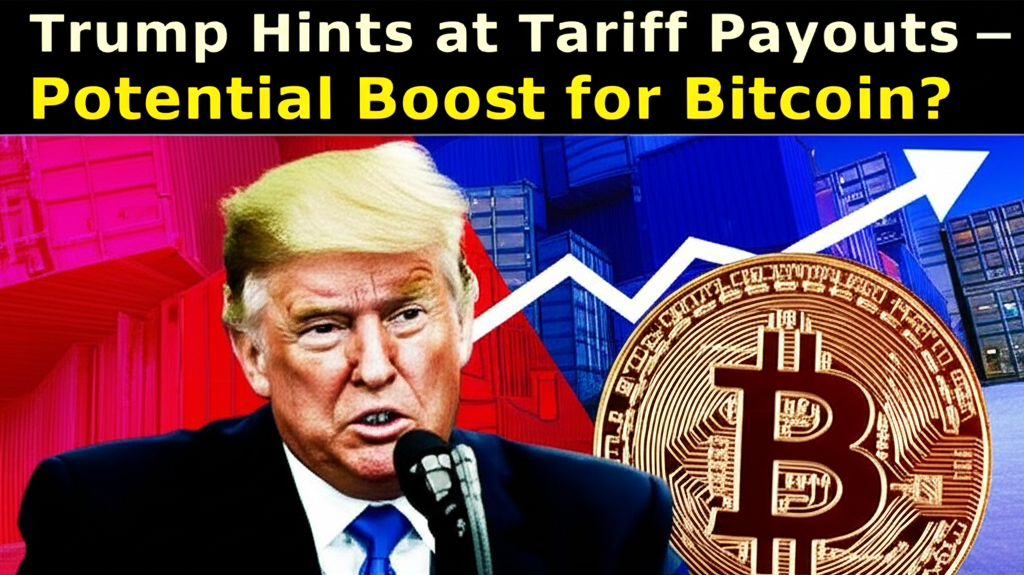
Former President Donald Trump recently hinted at a $2,000 tariff rebate that could have significant implications for both the stock market and cryptocurrency, particularly Bitcoin, echoing sentiments reminiscent of the pandemic-era stimulus checks.
Trump’s proposal comes amidst ongoing discussions about tariffs and their economic impact, potentially reshaping expectations around consumer spending and investment in both traditional and digital assets. The move is seen as part of a broader strategy aimed at leveraging tariff revenues to offer financial relief to American citizens, much like the direct payments issued during the COVID-19 pandemic. By coupling tariffs with consumer rebates, Trump aims to stimulate economic activity while appeasing constituents who are still grappling with the aftereffects of inflation and economic uncertainty.
As Bitcoin approaches previous all-time highs, the potential influx of cash from tariff rebates may encourage both retail and institutional investors to re-engage with cryptocurrency, further driving up prices. Analysts believe that similar scenarios had occurred following the pandemic stimulus checks, where increased disposable income led to a surge in investments in alternative assets, including Bitcoin. The timing of Trump’s proposal is critical as many investors are closely monitoring market conditions, seeking opportunities aligned with macroeconomic developments.
Historical analysis shows that similar government initiatives, like the COVID stimulus checks, resulted in notable surges in cryptocurrency market activity and price increases, setting the stage for potential repeat effects. During previous financial stimulus measures, Bitcoin experienced significant upward momentum, suggesting a correlation between government payouts and cryptocurrency investment behavior. As consumers received direct financial assistance, they often redirected a portion of these funds towards digital assets, bolstering Bitcoin prices and market interest.
“Donald Trump stated in a recent interview that the $2,000 checks could revolutionize the way Americans think about investments, hinting at a newfound economic strategy that merges tariff revenues with consumer relief,” a political analyst remarked. This statement indicates a potential shift in the economic paradigm, where Americans might view investments in cryptocurrencies as not just speculative but as viable long-term strategies to mitigate potential losses from traditional financial instruments.
In this regard, analysts at Bitfinex noted, “Trump’s suggestion of tariff-funded checks could lead to a resurgence in Bitcoin prices, drawing parallels to the $1,200 checks distributed during the pandemic, which notably boosted crypto investments.” The anticipation of receiving tariff rebate checks may also serve to reinvigorate interest in Bitcoin among those who may have previously been hesitant to invest, particularly given Bitcoin’s reputation as a hedge against inflation.
Historically, government-based financial stimulus strategies have significantly influenced market behavior across various sectors. The U.S. has seen cyclical patterns with each economic intervention, notably during the pandemic, where an influx of cash correlated with heightened investments in cryptocurrencies. Retail investors flooded the market with capital, leading to Bitcoin’s unprecedented price increases and increased engagement across exchanges and trading platforms.
Moving forward, as financial conversations lean towards stimulus checks fueled by tariff funds, analysts speculate this could lead Bitcoin towards another peak, with predictions suggesting potential price levels of up to $100,000 or more. The confluence of a favorable regulatory environment, increased institutional adoption, and the potential for tariff-funded checks all contribute to a bullish outlook for Bitcoin’s future.
This ongoing speculation, combined with the anticipated responses from retail and institutional investors, paints a cautiously optimistic picture for Bitcoin’s resurgence in the coming months. As debates around economic policies continue to evolve, the interactions between government actions, market dynamics, and cryptocurrency investments will remain a crucial focus for economists and financial analysts alike.