
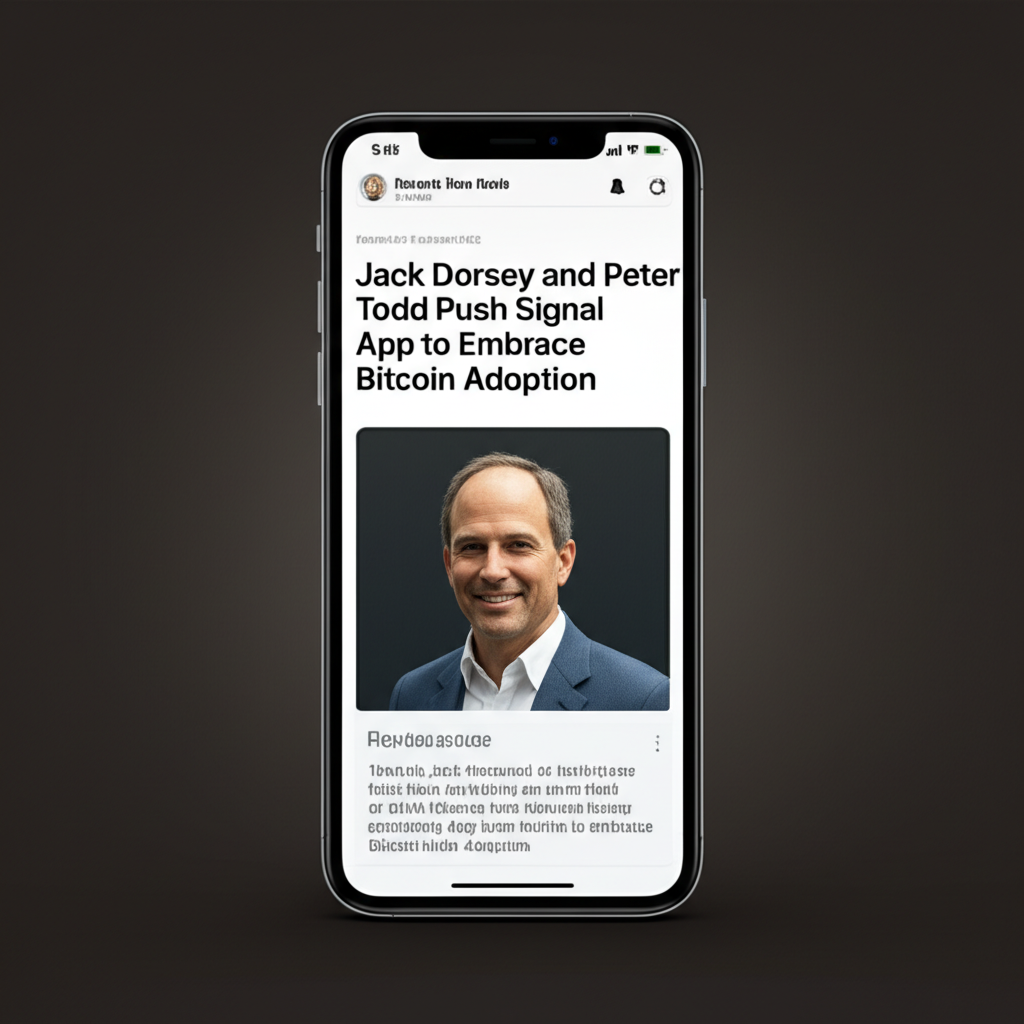
- Bitcoin advocates are urging Signal to adopt Bitcoin for payments through a new campaign called “Bitcoin for Signal”.
- The proposed integration involves Cashu’s “Chaumian Ecash” protocol to enable private Bitcoin payments within Signal.
- High-profile supporters include Jack Dorsey, Peter Todd, and other prominent figures in the crypto community.
- The campaign raises questions about Bitcoin’s privacy features and suitability for messaging apps.
- The effort comes amid regulatory debates in the EU over privacy and encrypted messaging laws.
Several prominent figures from the crypto space, including Twitter co-founder Jack Dorsey, are championing a movement to bring Bitcoin support to Signal, the encrypted messaging platform. The initiative, called “Bitcoin for Signal,” seeks to integrate Bitcoin payments through Cashu’s privacy-centric “Chaumian Ecash” protocol, promising truly private, peer-to-peer transactions within the app.
Since Signal adopted MobileCoin in April 2021, critics have raised concerns about its centralization, limited validation, and privacy implications. With around 70 million monthly active users, successfully integrating Bitcoin could position Signal as a major player in crypto-based privacy and peer-to-peer finance.
Jack Dorsey previously emphasized that for Bitcoin to fulfill its potential, it must go beyond store-of-value use and enable everyday transactions — an idea supported by this push for direct on-platform payments.
Bitcoin’s Privacy Limitations and Criticisms
Despite the enthusiasm, critics point out that Bitcoin itself is not privacy-centric and may be incompatible with Signal’s privacy principles. Bitcoin’s transparent blockchain raises concerns about user anonymity, especially in applications dedicated to secure messaging.
While Cashu offers a privacy-preserving approach to Bitcoin transactions, such solutions have yet to see widespread adoption at scale, and privacy remains a primary concern in linking Bitcoin with messaging apps.
European Union Moves to Regulate Private Messaging
This development unfolds amidst EU proposals like the “Chat Control” law, which seeks to mandate messaging platforms to scan private messages for illegal content, effectively breaching encryption protections. Germany has publicly opposed the law, citing violations of constitutional rights, leading to delays in legislative approval. The debate underscores a broader tension between privacy rights and regulatory oversight in the digital age.